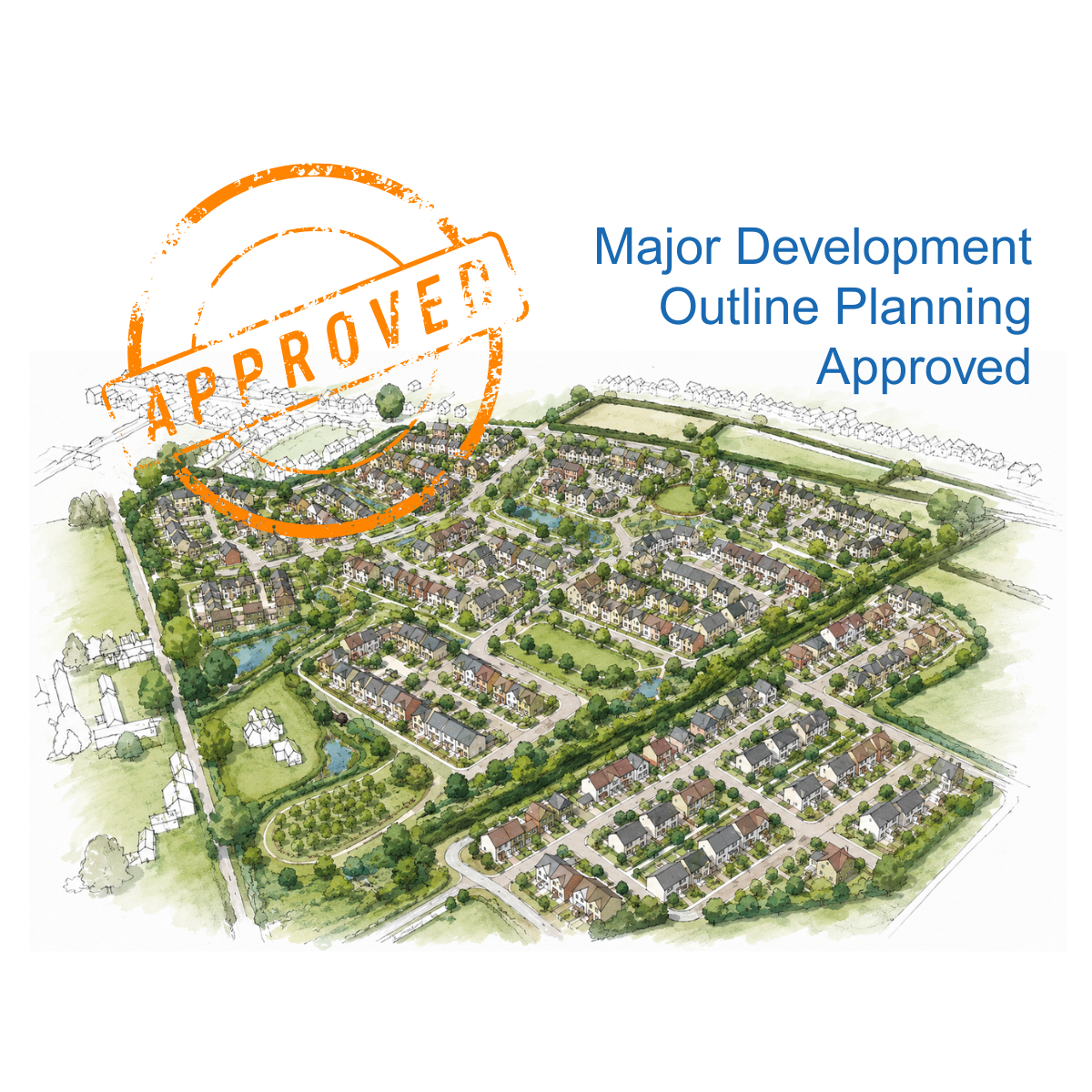
Can a development of nearly 1,000 homes achieve outline planning permission while protecting the surrounding night-time environment?
At DFL, we believe the answer is yes. Through a robust Lighting Strategy, we helped demonstrate how a major residential development in Balsall Common could balance safety, sustainability and environmental responsibility from the earliest stages of planning.
The Issue
The proposed development at Land off Station Road forms a key part of Solihull's long-term growth strategy, delivering up to 970 new homes, public open space, sustainable transport links and supporting community infrastructure.
With a project of this scale, lighting is about far more than visibility. It must create safe, welcoming streets and public spaces while respecting neighbouring homes, the surrounding landscape and environmentally sensitive areas.
DFL was appointed to undertake a detailed Lighting Impact Assessment, supported by a baseline night-time lighting survey and Lighting Strategy, to provide the technical evidence required for the outline planning application.
Our challenge was to demonstrate that future lighting could support the night-time placemaking of the scheme without creating unacceptable levels of light spill, glare or sky glow.
The Solution
We began by establishing existing night-time lighting conditions through a comprehensive baseline survey, creating a robust evidence base for the assessment.
Our team identified sensitive residential and ecological receptors before assessing the site's Environmental Zone in accordance with Institution of Lighting Professionals (ILP) guidance.
Using on-site measurements alongside technical modelling, we evaluated the likely effects of future lighting and developed an indicative lighting strategy showing how obtrusive light could be effectively controlled.
By specifying appropriate lighting principles within the Lighting Strategy, including carefully selected luminaires, controlled light distribution, suitable mounting heights and shielding where required, we demonstrated how lighting could support safety and accessibility while protecting neighbouring properties and environmentally sensitive areas.
Importantly, the strategy showed that lighting could become an integral part of the development rather than a planning constraint, giving the wider project team confidence that recognised best practice could be achieved as the design evolves.
The Result
DFL's assessment formed part of the evidence supporting the outline planning application, which has now been granted outline planning permission by Solihull Metropolitan Borough Council.
Our work demonstrated that the proposed development can provide safe, attractive public spaces while minimising impacts on neighbouring communities, the surrounding landscape and ecological receptors.
The Lighting Impact Assessment also established a clear framework for the detailed lighting design that will follow during the reserved matters stages, helping ensure good lighting principles remain embedded throughout the project's delivery.
By addressing lighting early, DFL helped reduce planning risk, support informed decision-making and contribute to a sustainable vision for one of Solihull's most significant residential developments.
The Team
Solihull Metropolitan Borough Council (SBMC)
Hallam Land Management – Land Promoter / Developer
Pegasus Group – Planning Consultant and Application Agent
DFL – Lighting Consultant
FAQs
Why is a baseline night-time lighting survey important?
A baseline night-time lighting survey records the existing lighting conditions before development takes place. It identifies current sources of light, existing brightness levels and areas that are naturally dark. This information allows potential changes to be assessed accurately and helps lighting designers develop solutions that are appropriate to the local environment.
How can sustainable lighting design reduce obtrusive light?
Sustainable lighting design reduces obtrusive light by using carefully selected luminaires, controlled light distributions, appropriate mounting heights and proportionate lighting levels. Light should be directed only where it is required, with shielding or additional controls used near sensitive boundaries. This can minimise light spill, glare, sky glow and unnecessary energy use.
Do you have a similar project that needs lighting assistance?
Let DFL take the stress out of your project.
Click the button and fill in a short form and we can have a Quote back in your hands in no time!
Want to chat about your project? We’re all ears.